
If ever we have needed survival skills, we need them now. The one survival skill you may not have considered is creativity. Yes. The survival skill you need is creativity.
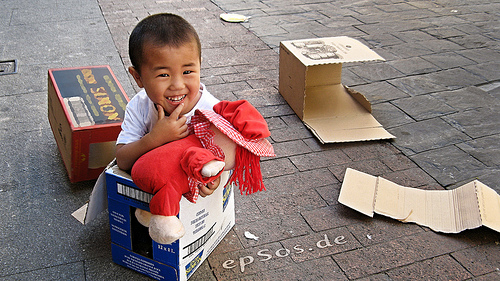
When we are children playing with toys, our imaginations soar. We see rocket ships in sticks and oceans in mud puddles. How is it that as we get older, we stop seeing those things?
Our society doesn’t value creativity like it once did.
How Creativity Lost Points
Modern society shoulders much of the blame. The realities of working for a living often mean we need to learn linearly. To enable our children to put food on the table and a roof over their heads, we send them to schools that devalue creativity and teach them linear thinking. For reasons. And yes, there are some classes that encourage and allow creativity. But most of them…not so much.
And then there is technology. Technology permeates our culture and our workplaces. Therefore, one must learn to use technology. And some of those gadgets and devices are both necessary and addictive. We work and play on them.
There are studies that say younger people (20s) don’t memorize things. They prefer to use gadgets and technology to do that. And their brains revert in the process of memorization to a more primitive form.
Younger people also prefer to read on a device. But text read by scrolling has a much lower retention or memorization rate.
Creativity is a Survival Skill

If you are in a survival situation and you lack food, clothing, or shelter. Your ability to solve your problems in a new way becomes a survival skill. Creativity isn’t just about art. Creativity is thinking differently. Adapting to new situations.
That said, anyone who looks at a problem—any problem—and sees it in a new way and offers a new solution is a creative.
Creativity requires cognitive flexibility and an openness to new ideas. And that, according to Scientific American, helps you live longer.
Creativity reduces stress. Creative people “tend not to get as easily flustered when faced with an emotional or physical hurdle.” (It certainly helps me!)
Creativity is also a way of exercising the brain. And yes, exercising your brain is as important as exercising your body.
Build Your Creative Skills

If you think of yourself as not creative, think again. You are creative. And you don’t have to be an artist to be creative. You’ve unlearned how to be creative. You can re-learn how to be and think creatively.
For this first exercise, I’m borrowing and adapting something I learned from artist Elizabeth Leggett.
Get something to write on. Go to your kitchen. Get one or two spices out of your cabinet.Take a big sniff of one of those spices.
Does that aroma remind you of anything? A place, a holiday, a food, or perhaps an event or day from your past.
Now take three minutes and jot down a few notes about what you thought of or felt immediately after smelling that spice.
That’s all. There’s no failure. Not even if the spice didn’t remind you of anything. The exercise is simply waking up your creativity.
Apply Constraints
Constraints force you to find another way. Constraints are the limitations or rules of a situation or a job or a task. When building a house you must consider many different constraints: where the plumbing comes into the property, what the slope of the land is, what city codes must be followed, and many more. Every task you’ve ever performed has some kind of constraints.
I’m five feet two inches tall. I cannot easily reach the top shelf of my kitchen cabinets. When I’m in the house alone, you may think I have only one way to reach that shelf and that is to use a ladder or step stool. But getting the ladder takes time and there are times when climbing even a two step ladder isn’t wise. Therefore, I’ve found ways to get what I need. I look around at the tools I have and I get creative.
I’ve used many things to extend my reach—a long wooden spoon, a grabber tool, and even a box of cereal or a rolled up newspaper. I’ve even used a stack of books to give me a step up.
Even if you aren’t short, I’ll bet you’ve had times when you’ve used what was handy to reach something.
So if you are feeling particularly un-creative give yourself some constraints. It can be simple. Take an image larger than 8 x 10 and create an interesting image out of it that is only 2 inches x 2 inches. Using two colors of paint, decorate a four-sided object so that each side is different. Knitters have patterns that use one particular stitch and create such different pieces as a hat and a sweater dress with only that stitch.
For a writer like me, the constraints come from the setting, the characters, the genre and the story structure one chooses.
Set up your constraints so that you must think differently in order to find a solution. You may not “solve” your problem the first try, but you will exercise flexible thinking.
Being flexible enough to work within the constraints you have is perhaps the number one survival skill everyone needs in this modern world.
You Are Creative
You may not think of yourself as an artist or talented, but I’ll bet you’ve solved at least one problem (big or small) this week in a creative way. Look back at the “problems” you had to solve this week. Recognize and celebrate those moments as creativity. Exercise that ability to think about things in a different way to stretch your skills.
What is one problem you solved this week by thinking differently?
Image Credits
Image by talha khalil from Pixabay
Image by Clker-Free-Vector-Images from Pixabay
Image by Barbara Dougherty from Pixabay
epSos.de. CC BY 2.0, via Wikimedia Commons

