
When life feels chaotic, heavy, and frightening, it’s extremely difficult to hold a creative thought in your head. Even when you want to create. Maybe, like me, you want to write a new book. Maybe you want to create a knitting pattern or try a new pottery glaze, or create a new piece of software, but something keeps stopping you from actually creating it. It can make you wonder if your creative life is done. You might even wonder if you were ever a creative person to begin with. That thought? It was planted in your brain. Deliberately. A long time ago.
How We Got Here
In order to understand how and when that idea was planted in children’s brains, you need to know a brief history of our education systems.
All the way back in Ancient Greece, there were tutors, or symposia, or religious schools to educate wealthy boys. They learned philosophy and rhetoric, and training that emphasized strength, military discipline, and leadership.
More formal education systems existed in Egypt’s Ancient Mesopotamia around 2000 BCE. These were private, religious schools that served children of the royal family and the sons of the rich, or the sons of professionals like scribes, physicians, and temple administrators.
Education across the world remained limited to young men from wealthy families, and literacy rates were 10% or less.
The Industrial Revolution Changes Everything
Around 1760, the European Industrial Revolution began. This shift from manual labor to the modern mechanized factory system created a need for workers to be more literate and more educated in order to work in these factories. Government-controlled and state-funded public school systems slowly emerged across Europe. During this time, most focused on religious education, on reading and writing Latin, and on studying scripture. It took a little longer for public education to reach the U.S.
Horace Mann (1796-1859) became the Secretary of Education for the state of Massachusetts in 1837. He conducted a massive reform of the education system in the U.S. He called it the Common School. And while curriculums have changed, schools today rely on the same general ideas of taxpayer revenue, professionally trained teachers, and standardized tests.
The Hierarchy of Subjects
The influence of the Industrial Age and the need for professionally trained teachers and standardized tests shaped nearly every school on Earth. And they each have the same hierarchy of subjects. A hierarchy that places the most useful subjects for obtaining employment at the top. Meaning: math, language, and humanities rank at the top, while art, music, drama, and dance are at the bottom. This ranking was not an accident. Academics designed schools intending to help children grow into employable adults. Thus, generations of people received the subtle message that being creative was not desirable, was not smart, and was not employable.

Sadly, genuinely brilliant, creative people learned to believe they were not brilliant. Not because they lacked intelligence, but because their education system—our education system—only measures one kind of intelligence.
Redefining Intelligence
In one of the most watched TED talks of all time, Sir Ken Robinson’s “Do schools kill creativity?” he states that intelligence is diverse, dynamic, and interactive.
According to Sir Robinson, diverse intelligence means that we humans think in all the ways we experience the world. Read that again. Intelligence is more than academia. MRI studies show that more than the logical mind lights up when we think. We think in all the ways we experience the world. We experience the world through movement, rhythm, sigh, color, sound, spatial thinking, kinesthetic knowing, storytelling, emotional resonance, and—
We don’t think with just our minds—we think with our full bodies, our whole selves.
So know this:
You are creative.
You are intelligent.
These two are not mutually exclusive. And your grades in academia do not measure diverse intelligence.
Stop believing the lie. Being creative is not a lesser thing. No matter how you express your creativity. No matter what your academic achievements were or were not. No matter if you weren’t “good” in music class or art class class during school. They weren’t testing diverse intelligence, so they probably weren’t even speaking your language.
You are creative.
Trust your body. Don’t be afraid. Try. It’s in there.
Your Creativity Right Now
In her Writers In the Storm blog post, Lighten Your Creative Load: A New Year Invitation, Lisa Norman says creativity is a living thing that needs room to breathe. She likens it to a flame. “If there’s too much fuel, a fire won’t burn properly.” She carries the metaphor further. “When fire is given the right logs at the right time, it provides lasting warmth.”
Like a fire, creativity needs the right conditions. That flicker of creativity you fear is a sign you aren’t creative is a signal. No matter if it’s been days or months or years since you’ve created anything, listen to what your body is telling you. Your flame isn’t out. It needs something. Maybe it needs more fuel, maybe it needs oxygen, maybe it needs combustion.
What’s Dimming Your Creative Flame?

All creatives—everyone of you carries obligations, responsibilities, pressures, grief, fears about your loved ones, fears about your countries, your world…the list is literally endless. And the pressure of all these things you carry is oxygen-stealing thieves.
We all have long lists of things we carry. Some of those things you must carry. But there are some things you carry without questioning. Things you hold on to because they used to serve you. Things you do that make you feel safe.
Look at your list. Identify which things make you feel good. Which ones feel heavy with dread? Does it feel scary to think about letting go of the heavy ones? Be honest with yourself. Identify one of those heavy things as something you can let go of.
If you’ve done that thing for very long, your brain will tell you it’s dangerous to let it go. So it’ll tell you it’s not that heavy. Not that scary. Your brain is trying to protect you from doing something different. To your brain, new equals unknown, and unknown is dangerous. Remind your brain that different isn’t dangerous. Different can mean room for your creativity to breathe, room to fan the flame of your creativity—and that’s a good thing.
Small Steps
Sometimes you can only feed that flame of creativity in tiny steps. That’s okay. With each tiny step, that little flicker grows. So give it what it needs. Give it time and space—and grace.
Sometimes creatives forget that being creative every day isn’t a piece of magic. It isn’t Shangri-La or some perfect office or creative space with the perfect ambiance or the perfect time. There might be a perfect time and place for you to create, but that doesn’t mean you should wait until you gain that space to create.
Maybe you light an actual candle in your workspace. Or you play music that speaks to your creative soul on endless repeat.


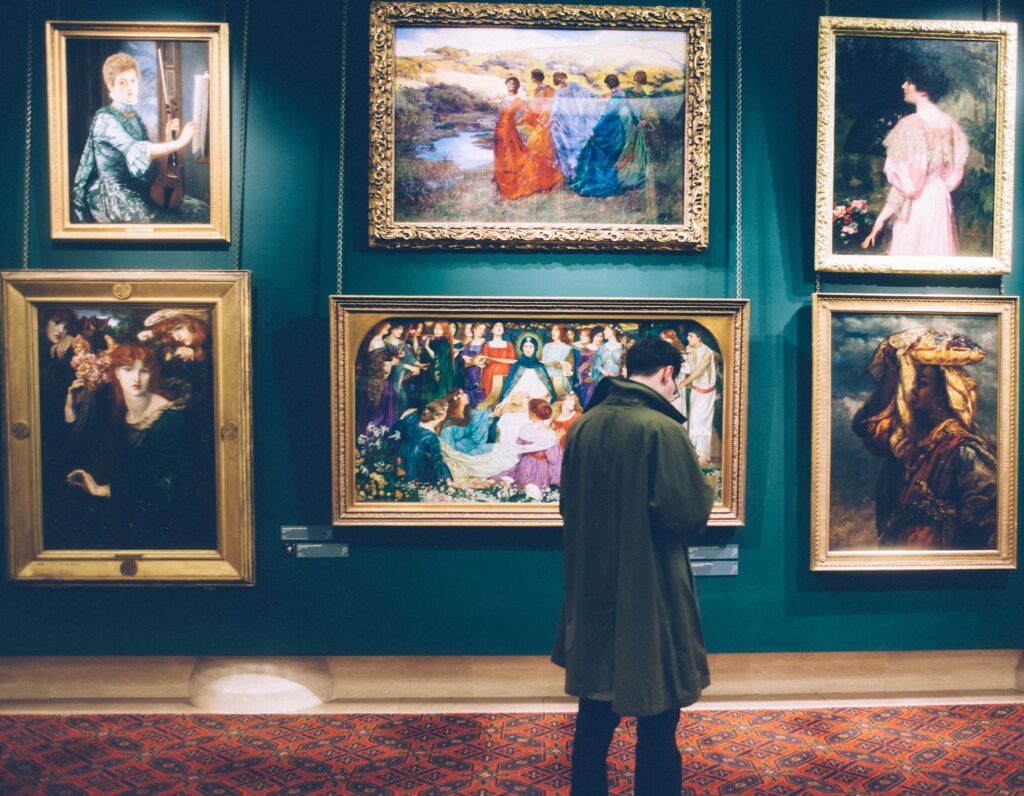

You are creative. Give your creativity the fuel it needs. Maybe you sit in a closet, or stroll through a museum, or an art gallery, or a yarn-selling store. Read a book about your favorite painter or potter. Take a class. Sit in your favorite shop with your favorite beverage and doodle.
You might need to experiment to see what works for your specific creativity at this specific time.
I recently read many book descriptions and movie synopses in the genre I’m exploring. That gave me the inspiration on how I’ll make my story like them but different.
The expression of your creativity is such an important part of who you are. Don’t ignore that flicker. Rekindle that flame. It’s not indulgence. It’s oxygen. Oxygen for your creativity. Oxygen for you.
Keep Your Creative Flame Going
Yes, life is heavy. That won’t change. But creativity isn’t a luxury you earn after you’ve paid the toll of carrying all the things. Creativity is part of what makes everything more bearable. Not just for you, the creative. Your creative work spreads warmth and lifts the weight of life for everyone you share that creativity with. So if you feel your creative flame is flickering under the weight of life, give yourself permission to tend that flame of creativity inside you. Take a minute right now and find one small thing to let go of and give your creative self some breathing room. The people around you, the world around you, need the warmth of your creative work.
What will you do today to tend your creative flame?
Want more like this?
Read/watch Be a Child and learn the right mindset for more tips on rekindling your creativity.
References
“Lightening Your Creative Load”
Image Credits
Featured and second images purchased from depositphotos.com
Third image uncredited from Pixabay
Gallery images from top to bottom, left to right: 1. By brixiv from Pixabay
2. By Felix Mittermeier from Pixabay

This is beautiful, Lynette.
Fear of letting go, even for one’s creative self, can be a scary thing.
Thank you, Ellen! Fear of letting go is definitely one of the scariest fears I’ve had. Then I learned what letting go can mean for other things in my life, and that was beautiful.