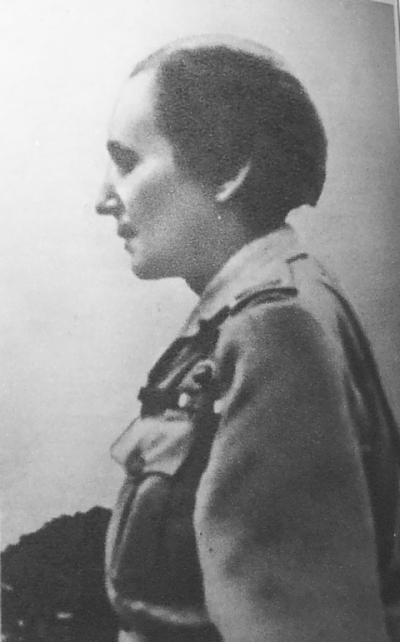
Born into a noble family, she could have led a comfortable life. She could have been a bookkeeper, keeping her head down and ignoring the forces that occupied her country. Instead of dreaming of “womanly” pursuits or a husband and a family, Wanda Gertz von Schliess wanted to be a soldier, an officer. Determined to fulfill her dream, she disguised herself as a male to serve on the Polish front during World War I. She took part in the Polish-Soviet War and World War 2. She was a soldier, an officer, a commandant, and a POW. She became Poland’s greatest female war hero. But if you don’t know history, you probably don’t know Wanda.
Short History of Poland
Historians trace Polish roots back thousands of years. The West Slavic Lechites (a tribe whose name means “people living in open fields”) established the first permanent settlements in the area during the early Middle Ages. They gave their land the name Poland.
Dynasties ruled for many centuries, and Poland entered a Golden Age and expanded to become a Commonwealth and one of the largest European powers. It was prosperous with a unique noble democracy and an elective monarchy for many years.
In the mid-17th century, it went through a period of devastating wars and the deterioration of its political system. The Russians invaded and partitioned the country. The Commonwealth ceased to exist.
Russian Rule
From 1795 until 1918, there was no independent Polish state. Central Poland, including Warsaw, became part of the Russian Empire under the Tsar. Russia appointed a King of Poland. The Tsar stripped away Polish constitutional rights. The Poles had to speak Russian, attend the Russian Orthodox Church instead of the Roman Catholic Church they favored, and give up all Polish customs under penalty of extreme punishment. Underground resistance groups grew. The Poles protected their identity, their culture, through clandestine cultural societies and domestic traditions. Some resistance grew to violence, but Russian forces quashed it. Somehow the Polish people kept their dream of independence alive. That dream inspired many, including a baby girl destined to be a war hero.
Early Life
Wanda Gertz von Schliess was born on April 13, 1896, to Florentyna and Jan Gertz von Schliess of Warsaw. She grew up in a family where patriotism and military service were not abstractions. Her father fought in the January Uprising of 1863-64, an unsuccessful insurrection against Russian imperial rule that resulted in tighter Russian control over Poland.
The defeat didn’t stop Wanda’s father from telling his children stories of the resistance.
“As a five-year-old girl, I never had any dolls, only innumerable toy soldiers, which my older brother, his friends, and I played with. Even then, I knew that high military rank was not for girls. My fondest dream was to become an officer. However, as a girl, I could only be a private.” (Excerpt from Wanda’s memoir per multiple sources.)
Education
When Wanda went to Kuzienkowa Gymnasium (secondary school, a college prep school), she joined the 4th Emilia Plater troop. Its namesake was a Polish-Lithuanian freedom fighter (1806-1831). The group operated as a clandestine independence-focused scouting movement that cultivated patriotism and taught practical survival skills among young women.
Trained in bookkeeping, Wanda graduated from secondary school in 1913. She worked for the Warsaw Chamber of Commerce.
The Great War
Exactly one month after the assassination of Archduke Franz Ferdinand, Austria-Hungary declared war on Serbia. It was 1914 and the beginning of what we now call World War I. Wanda was eighteen.
Wanda immediately joined a clandestine organization devoted to Polish independence. She distributed political leaflets and sewed haversacks (a strong canvas or cloth bag similar to today’s messenger bag) for soldiers.
A short while later, she joined the volunteer military unit known as the 4th Warsaw Battalion. The 1st Brigade of the Polish Legion absorbed Wanda’s Battalion in August 1915. The Polish Legion prohibited women from serving on the front lines.
Undaunted, Wanda cut off her hair and dressed in men’s clothing. Calling herself Kazimierz “Kazik” Żuchowicz, she went to the recruitment office of the Polish Legion.
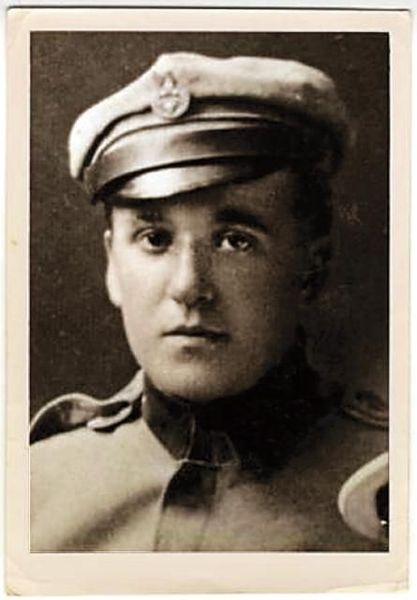
Discovered during the medical exam, sympathetic to her patriotism, the doctor didn’t report her. He covered for her and adjusted her assignment. She was to serve as a medical orderly.
Life as a Soldier
After a few weeks, they reassigned “Kazik” to an artillery unit. She served for six months in that unit.
As a horse rider, she served in a signals platoon. During the Brusilov Offensive (one of the bloodiest battles of the entire war), she repaired telephone lines under fire, stood watch at ammunition depots during night attacks, and even rescued two spooked horses from a grenade-damaged swamp. After the offensive, her orders sent her to Warsaw.
In 1917, she dropped her “male” disguise and joined the newly formed Women’s Branch of the Polish Military Organization (Polska Organizacja Wojskowa). In this underground organization, she openly operated as a female activist and logistics organizer. Though she’d dropped her male disguise, the nickname “Kazik” stayed with Wanda forever.
Fighting for Poland
In December 1917, she took part in a demonstration in Savior Square, an intersection near the Church of the Holiest Savior; German occupation authorities arrested her. They sentenced her o six months in prison, but they released her a few weeks after she paid bail.
Following her release, she worked as a courier. Then, in November 1918, when the occupation of Poland was collapsing, she was involved in disarming German troops
Poland won its independence in December 1918. After that, Polish women could vote and be involved in the military to a much greater extent.
The Polish-Soviet War
With German forces withdrawing from the Eastern Front, Vladimir Lenin sent the Russian Red Army westward to reclaim former Russian Empire territories. Poland moved eastward to defend its borders and civilians. In February 1919, advancing Russian troops met Polish troops near Bereza Kartuska and Vilnius.
Wanda enlisted in the Polish army. Her first assignment was to the 1st Lithuanian-Belarusian Division in April 1919.
The Second Women’s Volunteer Legion
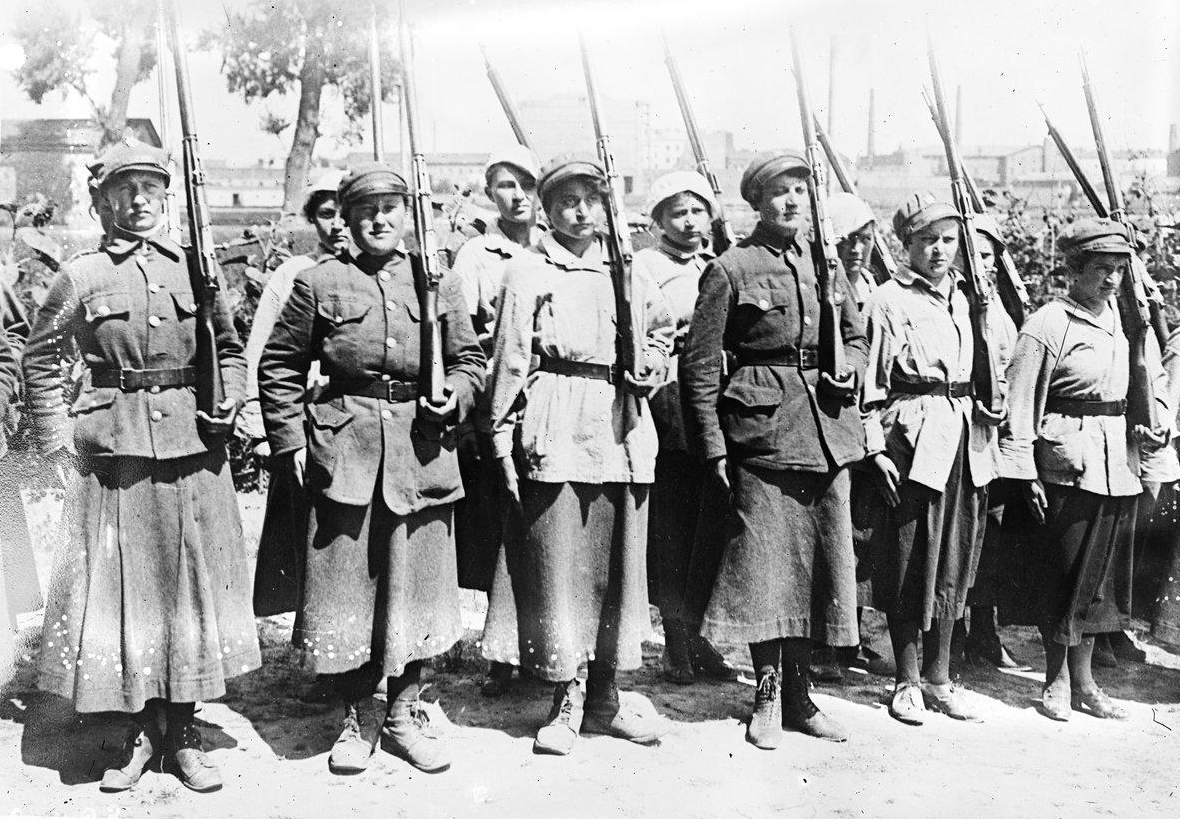
By September, they appointed Wanda the commander of the 2nd Women’s Volunteer Legion (Ochotnicza Legia Kobiet) in Vilnius.
The 2nd Women’s Volunteer Legion performed guard and patrol duties and, in “justified cases,” first-line service. But according to the rules:
- Women’s divisions are treated as divisions of the Polish army
- They are not intended to serve at the front
- In the military service, the natural predispositions of women are taken into account
- Preference is given to administrative, guard and communications service
- With the exception of guard duty, women are forbidden to serve with arms.”
According to historical documents, in reality they took an active part in battles for Lviv, Vilnius, and Warsaw. Documents reveal at least seventeen women fought with weapons.
Wanda and her troops fought off attacks by Hayk Bzhishkyan’s Cavalry Corps (a high-speed elite Red Army Strike Force) during the fight for Vilnius.
Wanda advanced to the rank of Lieutenant in 1920, and the government awarded her Poland’s highest military decoration for bravery, the Virtuti Militari medal. The first of many for Poland’s greatest female war hero.
The End of the War
Decisive wins by the Polish at the Battle of Warsaw and the Battle of the Niemen River stopped all military engagements of the Polish-Soviet War. On March 18, 1921, the two sides signed a treaty that defined Poland’s boundaries.
After demobilization, Wanda moved to the reserve forces.
In 1922, the authorities removed Wanda’s rank of lieutenant, stating that there was no basis in law for women in the Polish armed services to hold an officer rank.
Wanda remained an activist working toward the cause of women in the military.
The May Coup of 1926
On May 12, 1926, Marshal Józef Piłsudski led a military takeover in Poland. After three days of fighting and hundreds of casualties, the government surrendered.
Piłsudski created a Sanation government (1926-1939) to restore the moral fitness of public life. Wanda was his chief of staff.
In 1928, she became one of the first thirteen members of the Women’s Military Training Unit. She served as an instructor.
Piłsudski died in 1935.
After his death, Wanda co-founded the Belweder Museum. She managed the museum and devoted her spare time to other military activities. In 1938, she became treasurer of the Federation of Polish Associations for the Defenders of the Homeland. An umbrella organization, the federation united military veteran groups, reservists, and former servicemen. She resigned her museum management role in September 1939.
World War II
On September 1, 1939, Nazi Germany invaded Poland. Two days later, Great Britain and France declared war on Germany.
Wanda was one of the first women to join the resistance movement, Service for Poland’s Victory. She operated under the codename “Lena.”
She became an officer of the Home Army. As part of the Home Army, she organized clandestine communications, acted as a courier, and was an assistant to the divisional commander, Stanislaw Kozarski.
Poland’s First Women’s Sabotage Unit
In April 1942, she received orders to create and command a new unit, the Women’s Diversion and Sabotage unit (Dywersja i Sabotaż Kobiet) as part of the Kedyw. The Kedyw was a secret elite branch of the Polish Home Army. The unit’s primary tasks focused on armed sabotage, partisan warfare, intelligence operations, and the execution of Nazi German officials and collaborators.
Wanda’s unit carried out attacks on German military personnel, airfields, trains, and bridges. On August 1, 1944, the Polish Home Army launched a massive, sixty-three-day effort to free Warsaw from occupation before Soviet forces arrived. Perhaps Wanda had a premonition about that ending in failure. She prohibited members of her group from taking part in what was called the Warsaw Uprising. Some took part anyway. An overwhelming German military force quashed the uprising. Over 150,000 civilians died, and the fighting destroyed most of the city.
In September 1944, Wanda, operating as Kazik, earned a new rank: Major.
Prisoner of War
German forces captured Kazik on October 2, 1944. They held her as a prisoner of war. The Germans recognized her as the commandant of 2,000 other female fighters. They sent her to a series of POW camps: Ożarów, Lamsdorf, and Mühlberg. In late 1944, she arrived at Oflag IX-C, a prisoner-of-war camp for officers located south of Molsdorf, near Erfurt, Thuringia, Germany.
On April 5, 1945, the POWs of Mosdorf were force-marched away from the advancing front toward Blankenhain.
May 13, 1945, the U.S. 89th Infantry Division freed the prisoners at Blankenhain, including Wanda.
Polish Resettlement
Wanda arrived in the United Kingdom as part of the Allied Polish forces under British command. After the war, she traveled through Germany and Italy in search of displaced Polish women. From May 1946 through February 1949, Wanda served as Inspector of Women Soldiers in the North of England. Her task was to prepare those women for civilian life in Britain.
After demobilization, she worked at a canteen until her death.
Death
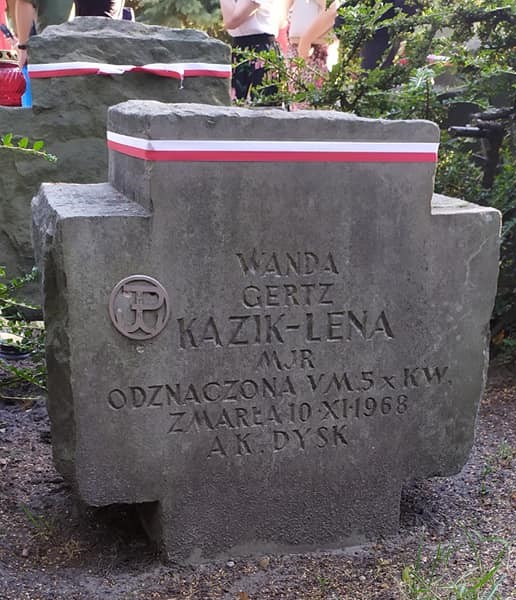
Wanda died of cancer on November 10, 1958, in England. She was sixty-two.
Many well-known Polish veterans attended her funeral.
In 1959, they took her ashes back to Poland and interred them at the Powązki Military Cemetery in Warsaw.
Legacy: Poland’s War Hero

Wanda was a five-time recipient of the Cross of Valor for her bravery.
She received the Virtuti Militari (Silver Cross) around 1920–1921 after her frontline service and command of the 2nd Women’s Volunteer Legion during the Polish-Soviet War.
In 1958, they posthumously awarded her the Knight’s Cross of the Order of Polonia Restituta.
She also received the Cross of Independence with Swords and the Gold Cross of Merit with Swords for her underground resistance and World War II service.
Final Salute
Of the approximately thirty women believed to have served in male disguise on the Polish front during World War 1, Wanda “Kazik” Gertz was the only one documented to have seen actual combat. She made history as the first woman to command a fully female military unit (the Women’s Diversion and Sabotage Unit) as part of the Polish Home Army. She earned the highest Polish military honors. Few other women of her generation achieved the same recognition.
Today, Polish people remember and honor Wanda as a symbol of female courage in World War 2. She resisted being placed in a box because of her gender. She kept enlisting even after they stripped her of her rank, even after they told her women couldn’t bear arms. She resisted when resisting often meant death. Wanda “Kazik” Gertz was a woman of resilience and resistance.
References
Image Credits
Featured image by unknown, Public domain, via Wikimedia Commons
Second image by Rafał Przybylski, CC BY-SA 4.0 , via Wikimedia Commons
Third image by Agence Rol. Agence photographique, Public domain, via Wikimedia Commons

Fourth image by Rafał Przybylski, CC BY-SA 4.0, via Wikimedia Commons

Final image by Mateusz Opasiński, CC BY-SA 3.0, via Wikimedia Commons
.jpg)
