
It’s vacation month (July) in the United States; for some it means letting go of all creative notions and work activities for days or weeks. For others, it is a continuation of creative work without reprieve. But isn’t there some middle ground? I believe there is.
What is a vacation?
Merriam-Webster Dictionary lists four definitions for the word vacation, which includes “a respite or a time of respite from something: intermission.”
So, in fact, a vacation doesn’t have to be something you do away from home or business. It is a respite, or a time of respite from something, an intermission. It can be whatever length you decide: a day, a long weekend, anything that is a break from your everyday life and work activities.
But many in Western cultures also believe that to get ahead one must “do it all.” They keep working even while vacationing or taking part in other activities. Creatives often carry this attitude over into their creative work. But as the saying goes, all work and no play makes a dull… Or does it?
Does a Vacation Affect Creativity Levels?
Christine J. Syrek, Jessica de Bloom, and Dirk Lehr published one of the few studies on creativity after a vacation in 2021. They investigated employees’ self-reported creativity before and after vacation and examined the changes in creativity.
What Syrek, de Bloom, and Lehr found was that taking a vacation doesn’t make you instantly more creative when you return to work. However, about two weeks later, employees they studied reported higher creativity. What was fascinating to me was that they found that people who completely disconnected from their work did not report any increase in creativity. If anything, they reported slightly less creativity. Finally, people who took part in challenging or meaningful activities during vacation (learning something new or doing something physically difficult) reported more creativity. The people who learned or did challenging things during their vacation were more creative overall.
Did you hear that, creatives? You can “take” a vacation by choosing to take part in something meaningful to you. Vacations that include meaningful activities will help you be more creative. Now I hear you. Many creatives are on limited incomes or have other responsibilities or limitations and cannot go on “vacation.” When they say vacation, they mean it as in a location away from home, often exotic and expensive. It doesn’t have to be. Staycations are valid ways to go on vacation.
So how do you actually include meaningful activities on your vacations and staycations?
The Science In Practice
Scientists like labels, so they’ve lumped all kinds of activities into the word “meaningful.” Focus on things that have value to you as a creative and as a person. Below are a few suggestions on how you might put meaning into your vacation.
Start Your Day with a Vacation Ritual
Rituals have a place in all our lives. They exist in annual first-day-of-school photos, proms, graduation ceremonies, birthdays, anniversaries, and so much more. It’s a practice that often marks a transition. That’s what a vacation ritual is. It’s an act or series of actions that mark your transition from everyday life to vacation.
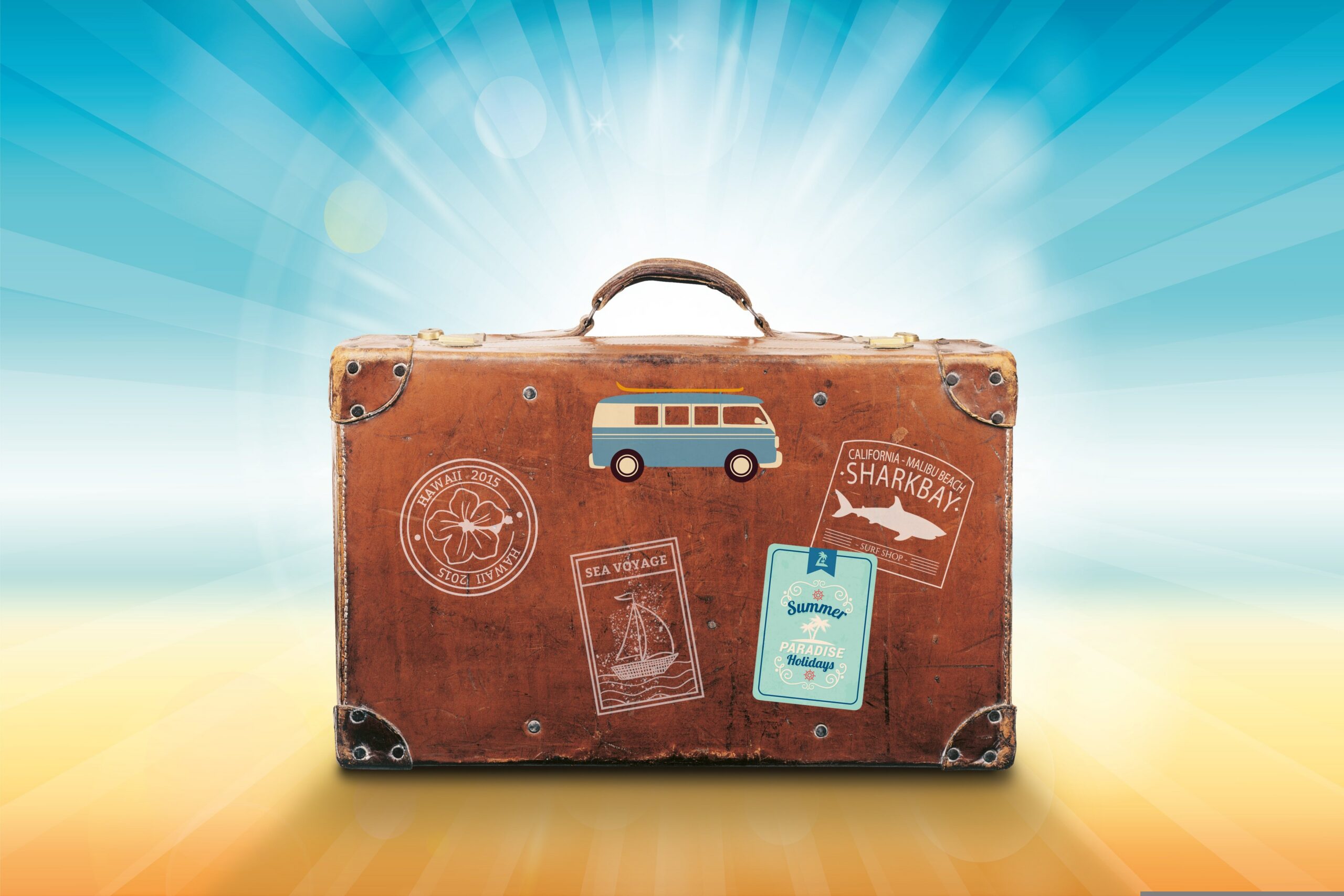
Packing your suitcase can be a vacation ritual (even if you will not travel). For some, the simple act of walking out their door and back inside can be a vacation ritual. One of my favorite vacation rituals is making myself a decadent breakfast full of my favorite foods (including chocolate) on the first morning. Sleeping in until noon, having breakfast in bed, or lighting every candle in your house can be rituals. Make it as big and elaborate or as small and intimate as you want.
By doing this ritual, you signal your brain and body that this day is different. This day is a break from the usual routine, even if you aren’t physically going to a different location. Another way to signal your brain that things are different is to involve all five senses.
Engage Your Senses
If your vacation takes you to a new physical location, great. Use it. Notice the differences with your whole body. Not just what it looks like, but notice what it feels like. Smells like. Tastes like. What sounds do you hear?
Many people cannot go to a new physical location for a lot of reasons. That doesn’t mean they can’t do the same. We often grow complacent and stop noticing our everyday environments. This month take a break and stop to notice yours. At least once a day for a week, use all your senses and appreciate your surroundings. Consider taking a moment to notice these things in different rooms of your home. If you’re fortunate enough to go to a local-to-you coffee shop, delicatessen, or library, take a moment to record what you sense in those locations. In particular, notice the differences you feel from one day or location to the next.
Make a record of what you learn about your environment. That record can be artwork, journaling, a photo collage, or a sensory journal. Collect the fragrances, blooms, and textures you encounter. You can put them in jars, in albums, wherever and however you’ll be able to experience that smell or texture or color again. You can record or digitize sounds, but try to stay away from screens as much as possible. Your record is anything that will help you recall exactly what you experienced in that moment.
But a record of the sensory input from your vacation may not be all you need.
A Vacation Journal
The term journal in this case simply means a record. It can be words (that’s my wheelhouse), but it can be photos, or drawings, or notes recorded on your phone. The idea is to make it specific to your vacation. Something new and different from what you’ve done before.
If, like me, you keep a daily journal, instead of simply recording your thoughts, try to put them into a haiku or other form of poetry. If you normally record your journal thoughts electronically, try a physical journal. If you express your creativity through images, try writing metaphors for what you are experiencing. If you’ve never kept a written journal, try a brain dump each morning. Put whatever you’re thinking into one long run-on sentence or a list. Whatever feels easiest.
Finally, try a “bad ideas” journal. In this, you write the silliest, most impractical ideas you have for five to ten minutes a day. This lets your creative mind play with things you’ve subconsciously or consciously said no to. This is a place to let yourself play.
Vacation Reading

When you’re on vacation, read. Read whatever you want to read. Many think they should read “inspiring” books, how-to books, or biographies of creatives they admire. If that’s what you love to read, read them. But also allow yourself to read fun things. Frivolous reading can open your brain to new ideas. So go ahead, read the funny book, the books that give you a “good” cry, or the ones that fill you with happily ever afters. Read widely.
I like to jot a few thought about a book I’ve finished reading, but don’t feel you have to. Vacation reading is for those books you thought might be a good read but you didn’t think you had time for. But don’t spend all your time inside.
Get Outside
Don’t forget to spend part of your vacation outdoors. Get some sunshine and fresh air. Walk your block. Take a hike in a nearby park or in more exotic locations. Notice how your body responds to being outside. Notice the weather, the air movement around you, and the temperature. Even just five minutes a day can make a difference in how you feel. Take full advantage of your creative vacation.
Quick Tips for a Creative Vacation
- Create a ritual to mark the shift.
- Notice your senses wherever you are.
- Keep a journal—words, images, or objects
- Read something just for fun.
- Get outside every day, even briefly.
Your Creative Vacation
The most important takeaway from the idea of a creative vacation is to give yourself a creative break. Don’t disconnect entirely from your muse during your vacation—give her an opportunity to play, to learn, to be challenged. When you give yourself that break, you might just awaken a new level of creativity afterward.
What ideas do you have or have you experienced on a creative vacation?
Resources
Image Credits
Featured image by G.C. from Pixabay
Second image by Stefan Schweihofer from Pixabay
Third image purchased from DepositPhotos

Love this. On my complete disconnect days, I love to garden or daydream about the fun story I’m working on… as well as reading books that are just fun.
Thank you, Lisa. I don’t garden any more but working with the earth is a great way to disconnect–in fact, the daydreaming and reading fun books are some of my favorites, too.